
Solar Maintenance•26 October 2026
Solar Panel Maintenance in Australia: A Practical Guide to Cleaning, Inspections and Performance
Regular solar system maintenance can help Australian homeowners identify performance issues, protect their equipment and keep their rooftop solar system operating as intended. Learn how to monitor solar production, recognise common warning signs, understand professional inspections and care for your panels safely in Australia's changing climate.
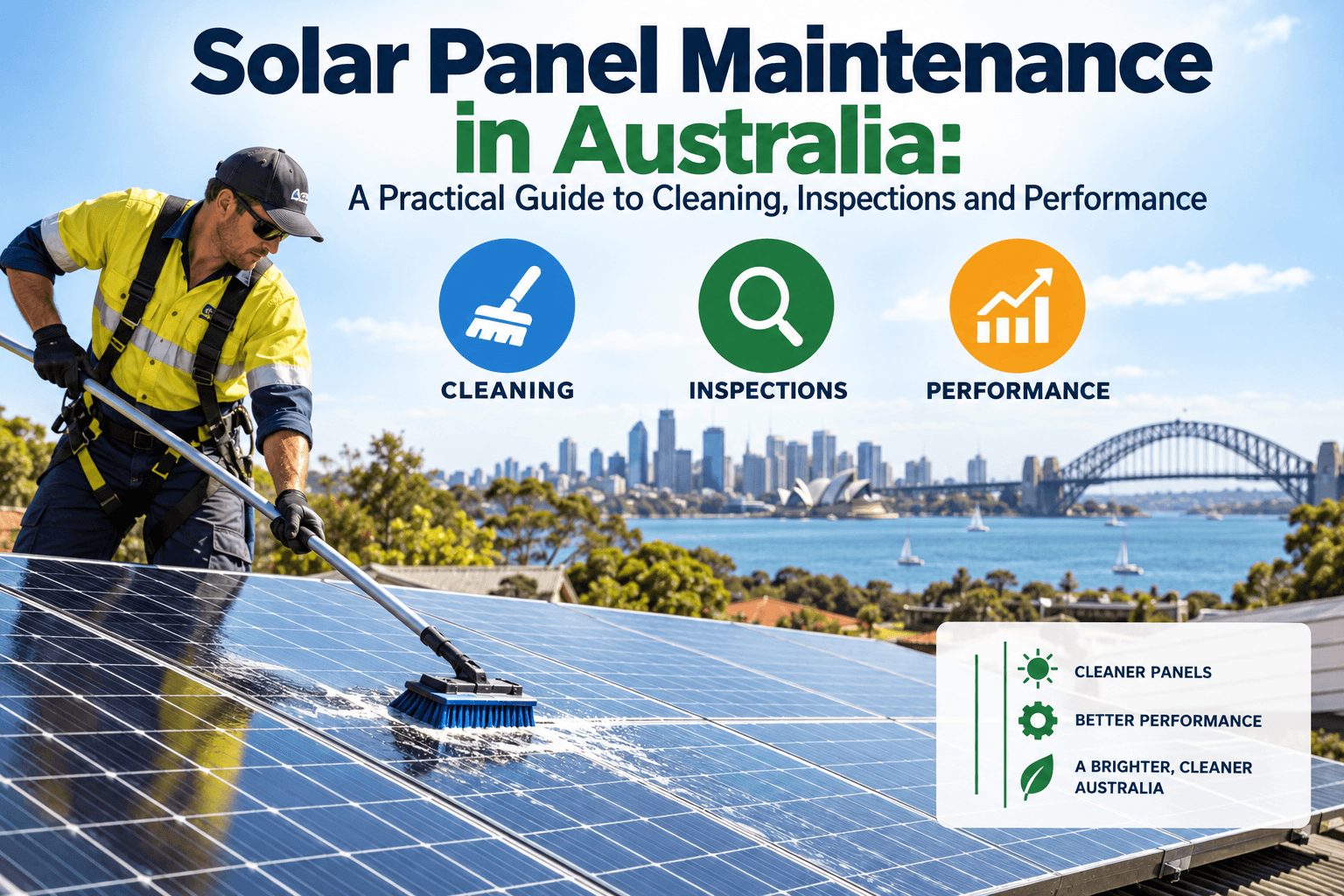
"Solar Panel Maintenance in Australia: A Practical Guide to Cleaning, Inspections and Performance"
Installing rooftop solar is a long-term investment for many Australian households. Once the system is operational, homeowners often assume that the panels can be left untouched for years.
Solar systems generally require relatively little routine maintenance, but that does not mean they should be ignored. Monitoring performance, checking for warning signs and arranging appropriate professional inspections can help identify problems before they become more serious.
This guide explains how to care for your solar system safely and what Australian homeowners should know about ongoing maintenance.
- Why Solar Panel Maintenance Matters Solar panels are designed for outdoor use and can withstand a range of Australian weather conditions. However, exposure to dust, debris, moisture, extreme weather and wildlife can affect the wider system over time.
Maintenance can help identify issues such as:
- Unexpected reductions in electricity generation.
- Inverter faults or system warnings.
- Damaged or deteriorated wiring.
- Loose or damaged mounting components.
- Excessive dirt or debris accumulation.
- Battery monitoring or charging problems, where applicable. Maintenance does not guarantee that faults will never occur, but it can help homeowners identify potential issues and arrange appropriate repairs.
- Monitor Your Solar System's Performance One of the simplest ways to look after a solar installation is to check its monitoring system regularly.
Many modern systems provide information through an inverter display or smartphone application.
Depending on the equipment, you may be able to see:
- Daily solar electricity generation.
- Current system operating status.
- Historical production trends.
- Battery charging and discharging information.
- Fault notifications. Compare production over similar periods rather than assuming that every day should produce the same amount of electricity.
Cloud cover, seasonal daylight changes, temperature and shading all influence solar output.
If production appears unusually low on several sunny days, investigate the monitoring information and contact your installer if necessary. 3. Do Solar Panels Need Regular Cleaning? Solar panels can accumulate dust, pollen, bird droppings, leaves and other debris.
Rain may remove some surface dirt, particularly on sloping panels, but it will not eliminate every deposit in every environment.
Cleaning requirements vary according to local conditions. Homes in dusty regions, near construction activity or close to certain trees may need more attention than properties with relatively clean surroundings.
However, frequent cleaning is not always necessary. The decision should consider the manufacturer's recommendations, observed dirt accumulation, safety and whether cleaning is likely to improve performance. Is it safe to clean your own solar panels? Roof work and electrical equipment present significant safety risks. Climbing onto a roof or handling solar equipment can result in serious injury.
Do not climb onto the roof or attempt electrical maintenance yourself. Arrange professional cleaning or servicing through a qualified provider who can assess the safest approach.
Avoid abrasive materials and unapproved cleaning products that could damage panel surfaces or affect warranties. 4. How Often Should a Solar System Be Inspected? There is no universal maintenance schedule that suits every solar installation.
Your system's manufacturer documentation, installation conditions and local environment should guide the maintenance plan.
The Australian Government's solar maintenance guidance notes that servicing every two years may be suitable in some circumstances.
An inspection by a qualified professional may cover:
- Panel condition and mounting security.
- Visible wiring and electrical components.
- Inverter operation and fault history.
- Switches, isolators and electrical connections.
- Battery condition and system operation, if installed.
- Debris accumulation and other environmental issues. The exact scope should reflect your equipment and site conditions.
- Common Signs Your Solar System Needs Attention You do not need to wait until your electricity bill increases substantially before checking your system.
Watch for these warning signs. Unexpectedly low electricity generation If production remains below expectations under comparable weather conditions, the cause could be shading, dirt, equipment faults or another technical issue. Inverter alerts An inverter may display an error code, warning light or notification through its monitoring application.
Record the message and contact your installer or service provider for advice. Visible equipment damage After severe weather, you may notice damage to accessible equipment or changes in the system's appearance from the ground.
Do not approach damaged electrical equipment or climb onto the roof to investigate. Keep clear and contact a qualified professional. Battery performance changes For systems with batteries, monitoring may reveal unexpected charging behaviour, warnings or reduced usable capacity.
Battery faults should be assessed by a suitably qualified service provider. 6. How Australian Weather Can Affect Solar Systems Australian conditions vary considerably between coastal, urban, inland and regional areas.
Different environmental factors can affect solar installations in different ways.
Dust and debris: Accumulation may reduce the sunlight reaching the panels.
Heat: Solar panel output can decrease as panel temperature rises, depending on the equipment and operating conditions.
Storms and hail: Severe weather can damage panels, mounting hardware or other equipment.
Coastal conditions: Salt exposure and moisture make appropriate equipment selection and inspection particularly important.
Vegetation: Growing trees can gradually create shading that was not present when the system was installed.
A suitable maintenance plan should reflect the property's location rather than follow a one-size-fits-all schedule. 7. What to Do If Your Solar System Stops Working If your monitoring application indicates a fault or the system appears to have stopped generating electricity:
- Check the monitoring application for any recorded warning or error message.
- Review whether recent weather conditions could explain the change.
- Contact your original installer or an appropriately qualified solar service provider.
- Keep records of the issue, including dates and any displayed error messages.
- Check your warranty documentation before authorising repairs. Do not remove covers, handle electrical wiring or attempt to repair an inverter or battery yourself.
Solar installations can present electrical hazards even when the household's ordinary electricity supply has been switched off. 8. Keep Your Warranties and Installation Documents Store your solar installation paperwork in an accessible place.
Important records include:
- Panel and inverter product warranties.
- Battery warranty documents, if applicable.
- Installation and workmanship warranties.
- System design and commissioning documentation.
- Electrical compliance documents.
- Maintenance and repair records.
- Installer and manufacturer contact details. Warranty conditions vary by product and provider. Review the documents carefully so you understand the relevant coverage, exclusions and service procedures.
- Can Maintenance Help Your Solar System Last Longer? Appropriate maintenance can help identify deterioration, improve fault detection and support reliable operation.
However, individual components have different expected service lives. For example, an inverter may need replacement before the solar panels do.
Regular monitoring and professional assessment can help you understand the condition of your system and plan for repairs or equipment replacement when needed.
For additional independent information, visit the Australian Government's Look after your solar system guide. Conclusion Solar panels do not usually require constant attention, but regular monitoring and appropriate professional maintenance are important parts of responsible ownership.
By checking system performance, recognising warning signs, keeping your documentation and arranging inspections when needed, Australian homeowners can better understand their solar system's condition.
Written by Hujurat Solar Team
Get a free quote