
Residential Solar•9 November 2026
Is Solar Power Worth It for Homes in Sydney? Costs, Rebates and Benefits
Thinking about installing solar panels at your Sydney home? Discover how residential solar systems work, what affects installation costs, which Australian incentives may be available, and how to choose the right solar panels, inverter and battery for your household.
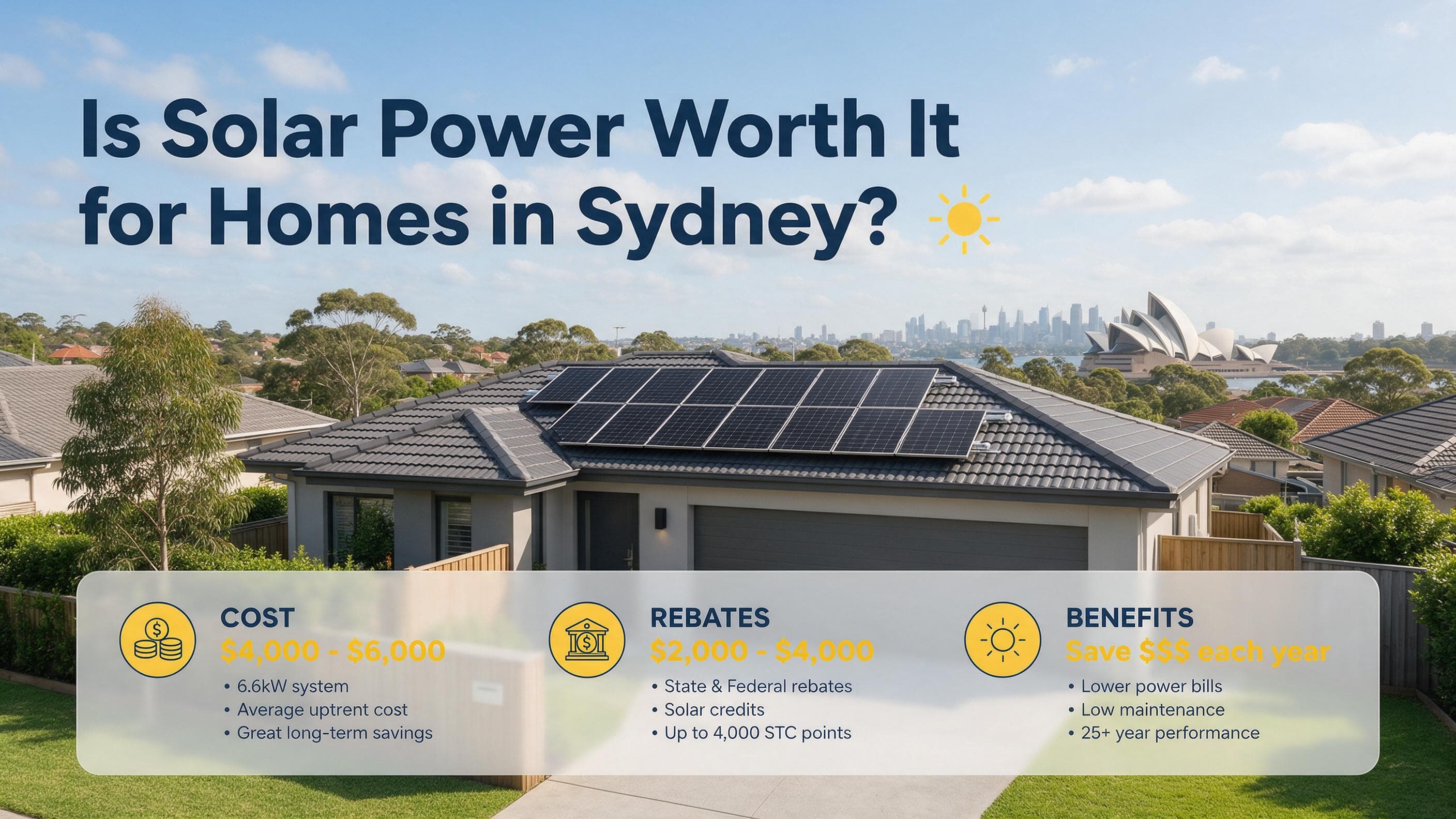
Is Solar Power Worth It for Homes in Sydney? Costs, Rebates and Benefits
With electricity costs and energy efficiency becoming important considerations for Australian households, many Sydney homeowners are exploring rooftop solar power. Installing solar panels can help reduce reliance on grid electricity, improve household energy management and make better use of Sydney's abundant daylight.
However, the benefits of solar vary from property to property. Your roof, daily electricity consumption, electricity tariff, system size and installation costs all influence whether solar is a suitable investment for your home.
In this guide, we explain how residential solar works in Sydney, what equipment you may need and what to consider before requesting an installation quote.
- How Does Residential Solar Work?
A residential solar system converts sunlight into electricity using photovoltaic (PV) panels installed on your roof or another suitable location.
The electricity generated can power appliances such as lights, refrigerators, computers, washing machines and air conditioners. When solar generation is insufficient, your home can draw electricity from the grid if you have a grid-connected system.
A typical solar installation includes:
Solar panels: Generate electricity from sunlight.
Solar inverter: Converts the generated electricity into a form suitable for household use.
Mounting system: Secures the panels to the roof.
Electrical protection: Helps protect the installation and its circuits.
Battery storage, if required: Stores electricity for use when solar generation is low.
The equipment and system configuration should be selected according to your property's electricity needs and installation conditions.
- What Are the Benefits of Solar Panels in Sydney?
Potential Savings on Electricity Bills
Solar panels can reduce the amount of electricity you purchase from your retailer by supplying some of your household's energy needs directly.
The greatest financial benefit often comes from using your own solar electricity rather than exporting surplus energy to the grid. This is because the value of electricity you avoid purchasing can differ from the feed-in tariff you receive for exported electricity.
Your actual savings depend on your household's energy usage, solar generation, electricity rates and system costs.
Better Energy Management
Solar power can help households manage daytime electricity use. Running suitable appliances during periods of strong solar generation can increase the amount of solar electricity consumed at home.
A compatible battery can store some of that energy for later use, although its financial benefits depend on battery cost, usage patterns and available electricity tariffs.
A More Sustainable Home
Solar panels generate electricity without direct fuel combustion during operation. Using solar electricity can reduce reliance on electricity generated from fossil fuels, although the overall environmental impact also depends on equipment manufacturing, installation and disposal.
Long-Term Energy Planning
Solar panels are intended to operate over many years. Choosing suitable equipment, ensuring professional installation and following maintenance recommendations can help you plan for long-term electricity generation.
- How Much Does Solar Installation Cost in Sydney?
There is no single price for every Sydney home. Installation costs depend on the system's capacity, equipment quality, roof design, electrical work and whether battery storage is included.
When requesting quotes, compare the full installed cost rather than focusing only on the advertised system price.
Your quotation should clearly identify the solar panel brand and model, inverter specifications, mounting equipment, electrical protection, installation labour, monitoring features and applicable warranties.
If you are considering a battery, request separate pricing for the solar system and battery components. This makes it easier to assess the additional cost of storage.
It is also worth obtaining more than one detailed quote and checking that each proposal covers a comparable system.
- Are Solar Rebates Available in Australia?
Eligible rooftop solar installations may qualify for an upfront discount through Australia's Small-scale Renewable Energy Scheme. This commonly involves small-scale technology certificates (STCs), which an eligible customer may assign to a registered agent in exchange for a discount on the system purchase price.
The value depends on the system's eligibility and applicable rules, so confirm the discount shown on your quotation.
Eligible battery installations may also qualify for assistance under the Australian Government's Cheaper Home Batteries Program. Eligibility requirements, eligible equipment and available discounts can change, so check the current program conditions before committing to a purchase.
Ask your installer to explain which incentives are included in the quoted price and whether you need to meet any additional requirements.
- Should You Install a Solar Battery?
Not every Sydney household needs a battery.
A grid-connected solar system without storage may be suitable when your main objective is to reduce daytime electricity consumption and your existing grid connection meets your needs.
A battery may be worth considering if you use substantial electricity after sunset, need backup power during outages or want to increase the amount of solar electricity available for later use.
Before choosing a battery, determine which appliances you want to support, how long you need them to operate and whether the proposed inverter supports backup operation. A standard grid-connected solar system does not automatically supply electricity during a power outage.
- What Is a Solar Feed-in Tariff?
A feed-in tariff is the rate your electricity retailer pays or credits you for eligible solar electricity exported to the grid.
In NSW, retailers set their own feed-in tariff offers. The Independent Pricing and Regulatory Tribunal (IPART) publishes benchmark ranges to help customers understand the value of solar exports.
For the 2026–27 financial year, IPART's benchmark for flat-rate solar feed-in tariffs is 3.4 to 6.5 cents per kilowatt-hour. This is a benchmark, not a guaranteed rate or mandatory retailer price.
When comparing electricity plans, look at the feed-in tariff alongside electricity usage rates, daily supply charges and any other conditions. A higher feed-in tariff does not necessarily mean a cheaper overall electricity plan.
- How to Choose a Solar Installer in Sydney
Before selecting an installer, ask for a system design tailored to your property rather than a generic package.
Check that the installer holds the appropriate accreditation and electrical licensing, uses approved equipment and can explain the expected energy generation and system limitations.
Your assessment should also cover roof condition, shading, panel placement, inverter location, battery requirements and the approval process for connecting the system to the electricity network.
Ensure the contract clearly explains what is included, the payment terms, installation timeframe, warranties and after-sales support.
Conclusion
Solar panels can be a worthwhile option for Sydney homes, but the best system depends on your electricity usage, roof suitability, budget and energy goals.
By comparing detailed quotations, understanding available Australian incentives and selecting appropriately qualified installers, you can make a more informed decision about residential solar.
Planning to install solar at your Sydney property? Arrange a site assessment and request a tailored quotation to understand the system capacity, installation cost and potential benefits for your household.
Written by Hujurat Solar Team
Get a free quote