
Solar System Guides•9 November 2026
On-Grid vs Hybrid Solar Systems in Sydney: Which Is Best for You?
Not sure whether to choose an on-grid or hybrid solar system for your Sydney home or business? Compare installation costs, battery storage, backup power and electricity bill savings to find the right solar solution for your property.
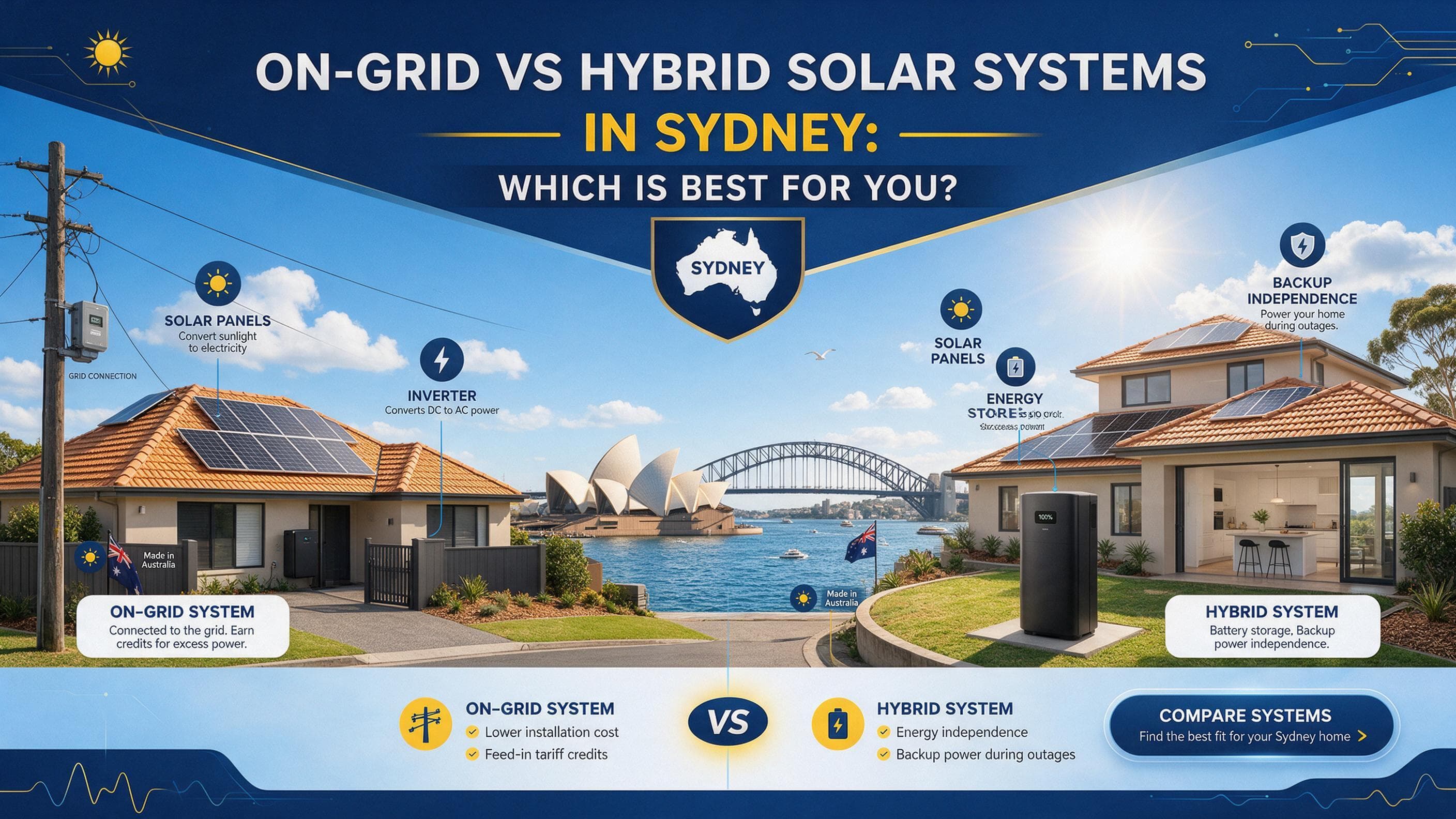
On-Grid vs Hybrid Solar Systems in Sydney: Which Is Best for You?
Choosing the right solar system is an important step when planning a solar installation in Sydney. Two common options are on-grid solar systems and hybrid solar systems.
Both use solar panels to generate electricity, but they differ in their use of battery storage, interaction with the electricity grid and ability to provide backup power.
Understanding these differences can help you select a solution suited to your household, business, budget and energy consumption.
- What Is an On-Grid Solar System?
An on-grid solar system connects your solar installation to the electricity network.
During daylight hours, the solar panels generate electricity that can be used by your appliances. If your household needs more electricity than the panels produce, it can draw the balance from the grid.
Surplus electricity may be exported to the grid, subject to network connection requirements and your electricity retailer's arrangements. You may receive a feed-in tariff for eligible exports.
Benefits of an On-Grid System
Usually has a lower initial cost than a comparable system with battery storage.
Can reduce the amount of electricity purchased from your retailer.
May be suitable for properties that consume substantial electricity during daylight hours.
Does not require battery storage as part of the basic system.
Limitations
A standard grid-connected solar inverter generally shuts down during a grid outage for safety reasons. Therefore, an ordinary on-grid installation should not be expected to power your home during a blackout.
Your actual results will also depend on your roof, electricity consumption and the export conditions approved for your property.
- What Is a Hybrid Solar System?
A hybrid solar system combines solar panels, a compatible inverter, battery storage and a grid connection.
During the day, solar electricity can power your appliances and charge the battery. When solar generation decreases, the system may use stored electricity to support your energy needs.
If the system has been designed with suitable backup functionality, it can also power selected circuits during certain grid outages.
Hybrid systems can be useful for households or businesses that want to increase their use of solar energy while maintaining a level of backup power.
Benefits of a Hybrid System
Can store surplus solar energy for later use.
May provide backup power for selected circuits during grid outages.
Can help reduce grid electricity consumption outside daylight hours.
Offers flexibility for households with changing energy needs.
Limitations
Hybrid systems typically involve a higher upfront investment when battery storage is included. They also require careful equipment selection, electrical design and battery installation.
Battery performance depends on its usable capacity, condition, charging settings and the appliances being supplied.
- On-Grid vs Hybrid Solar: Key Differences
Initial Installation Cost
An on-grid system without a battery is generally less expensive than a comparable hybrid system with storage.
A hybrid system adds the cost of the battery, compatible inverter equipment and any additional backup electrical work. Available incentives may affect the final purchase price for eligible installations.
Power During Blackouts
A standard on-grid system normally switches off during a grid outage.
A hybrid system can provide backup power only when its equipment and electrical configuration support that function. Confirm which circuits will remain powered and whether large appliances can be supported.
Electricity at Night
Without a battery, an on-grid system generally relies on grid electricity when solar power is unavailable.
A hybrid system can use stored energy at night, subject to battery charge and system configuration.
System Complexity
On-grid systems are generally simpler when no battery is required.
Hybrid systems need additional planning for battery compatibility, charging, backup loads and installation safety.
- Which System Is Better for a Sydney Home?
An on-grid system may suit a household that uses a considerable amount of electricity during the day and wants to reduce grid consumption without investing in battery storage.
A hybrid system may be more appropriate if your household has substantial evening energy use or requires backup electricity for essential equipment.
Before deciding, review your electricity bills and identify when you use the most power.
For example, a household that can run appliances during sunny hours may use a larger share of its solar generation directly. A household that consumes most of its electricity after sunset may want to investigate battery storage, while assessing whether the additional cost makes financial sense.
- Which System Is Better for a Sydney Business?
Commercial properties have different operating patterns.
Offices, retail stores and workshops that consume significant electricity during daylight hours may benefit from an on-grid system designed around their daytime demand.
Businesses that need backup for essential equipment may wish to investigate a hybrid system. However, equipment such as commercial refrigeration, pumps, machinery and air conditioning may require more substantial inverter capacity and battery storage.
A commercial solar assessment should evaluate operating hours, peak demand, the nature of essential loads and the cost of business interruption.
Larger systems may have additional connection, technical and approval requirements, depending on their size and location.
- Don't Overlook Solar Feed-in Tariffs
If your system exports surplus electricity, the feed-in tariff offered by your electricity retailer affects the value you receive for those exports.
Retailer offers can differ, and the highest advertised feed-in rate does not automatically provide the cheapest electricity plan overall.
Compare the complete plan, including usage rates and daily supply charges. Also consider how much solar electricity you can use directly at your property.
The best system is not necessarily the one that exports the most electricity. It is the system that aligns with your energy use and financial objectives.
- Check Australian Solar Incentives
Eligible solar installations may qualify for an upfront discount through the Australian Small-scale Renewable Energy Scheme, subject to applicable requirements.
Eligible battery systems may also qualify for the Australian Government's Cheaper Home Batteries Program. Confirm current eligibility, approved equipment and discount arrangements with your installer before signing a contract.
Incentives should be included transparently in your quote so you can distinguish the system's price from the value of applicable discounts.
- Five Questions to Ask Before Choosing
Before making a decision, consider these questions:
How much electricity does the property use each day?
When is electricity consumption highest?
Is battery backup essential?
Which appliances need to operate during a grid outage?
What are the full installation costs, warranties and ongoing requirements?
The answers will help your installer recommend a suitable system capacity and configuration.
Conclusion
Both on-grid and hybrid solar systems can suit Sydney homes and businesses.
An on-grid system may be a practical choice when the main goal is reducing grid electricity consumption without battery storage. A hybrid system may be more suitable when stored energy and backup functionality are important.
The right choice depends on your electricity usage, budget, roof conditions and priorities. Request a system-specific assessment before deciding which solar installation is best for your property.
Written by Hujurat Solar Team
Get a free quote