
Solar Batteries & Upgrades•28 October 2026
Solar Battery Retrofitting
Already have solar installed and wondering if you can add battery storage without replacing your current setup? The short answer is yes. Retrofitting a battery to an existing solar system is one of the smartest ways Australian homeowners can beat rising electricity prices and maximize self-consumption. In this guide, Hujurat Solar breaks down AC vs. DC coupling, inverter compatibility, key costs, and what to check before adding storage to your roof.
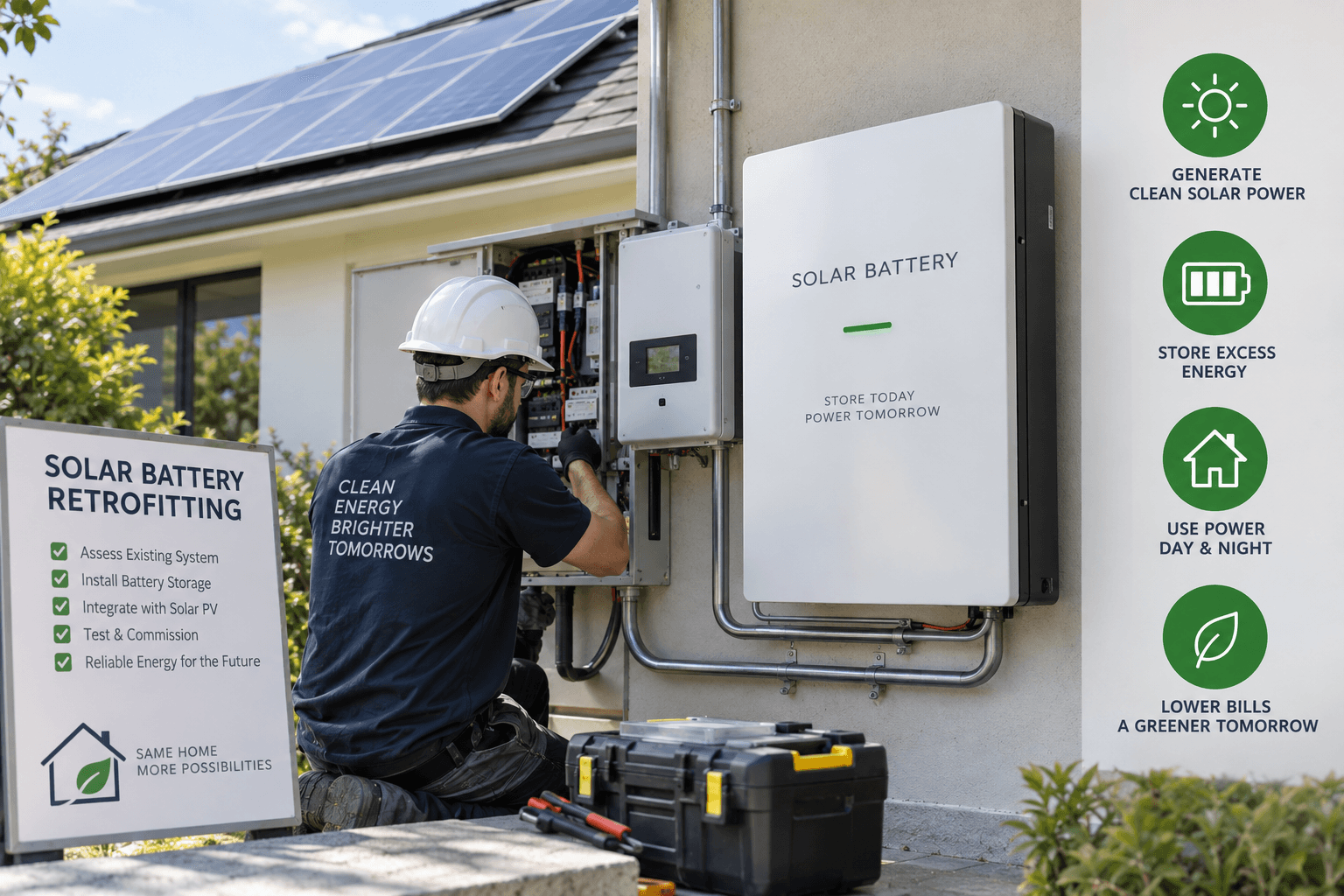
As electricity tariffs across Australia continue to rise, thousands of homeowners with existing rooftop solar setups are asking the same question: Can I add a battery to my current system, or do I need to start from scratch?
The good news is that almost any existing solar array can be upgraded with battery storage. However, the exact setup depends on your current inverter type, system age, and household energy patterns. At Hujurat Solar, we help homeowners retrofit smart storage solutions seamlessly to boost their energy independence.
AC Coupling vs. DC Coupling: Which Retrofit Path Is Right for You? When adding a battery to an existing solar system, installers typically use one of two methods:
AC Coupling (Most Common for Retrofits)
How it works: A secondary battery inverter is installed alongside your existing solar string inverter. Your solar panels generate DC power, which your existing inverter converts to AC. The battery inverter then converts surplus AC power back into DC to store in the battery.
Why choose it: It works with any existing solar inverter regardless of brand or age. You don’t need to replace your current solar equipment.
DC Coupling (Hybrid Inverter Upgrade)
How it works: Your existing solar inverter is replaced with a single hybrid inverter that manages both your rooftop solar panels and the battery directly in DC.
Why choose it: Slightly higher round-trip efficiency because it avoids multiple AC/DC conversions. Ideal if your existing string inverter is near the end of its lifespan (7+ years old).
4 Crucial Checklist Items Before Retrofitting a Solar Battery Before signing off on a battery addition, ensure your installer evaluates the following:
Your Current Daytime Solar Surplus: A battery requires excess solar generation to charge. If your system barely covers your daytime usage, you may need a panel expansion along with the battery.
Switchboard & Meter Box Capacity: Older Australian homes often require minor switchboard upgrades to comply with current AS/NZS 4777 and AS/NZS 5139 safety standards for battery installations.
VPP (Virtual Power Plant) Compatibility: Choosing a VPP-ready battery allows you to trade stored energy back to the grid during peak demand events for extra bill credits.
Emergency Blackout Protection (EPS): Not all batteries come with blackout backup by default. If backup power during grid outages is critical, specify EPS capabilities during the design phase.
Is Retrofitting Worth the Investment? With state-based incentives, peak-rate electricity charges, and decreasing feed-in tariffs, storing your self-generated energy is significantly more profitable than exporting it back to the grid. A retrofitted battery allows you to power your home through the evening using free, clean energy harvested during the afternoon.
Want to see if your current system is battery-ready? Contact the expert team at Hujurat Solar today for a customized site assessment and retrofitting quote.
Written by Hujurat Solar Team
Get a free quote