Campbelltown, NSW
This Australian rooftop installation features approximately 19–20 solar panels forming a ~10 kW array, paired with a Hinen hybrid inverter and 4 Hinen stackable LiFePO₄ battery modules (~20 kWh total storage). Depending on the city, the system should generate roughly 40–55 kWh per day (15,000–19,000 kWh per year), with the 20 kWh battery well-sized to maximise self-consumption under Australia's 5 kW single-phase export limits and low feed-in tariffs.
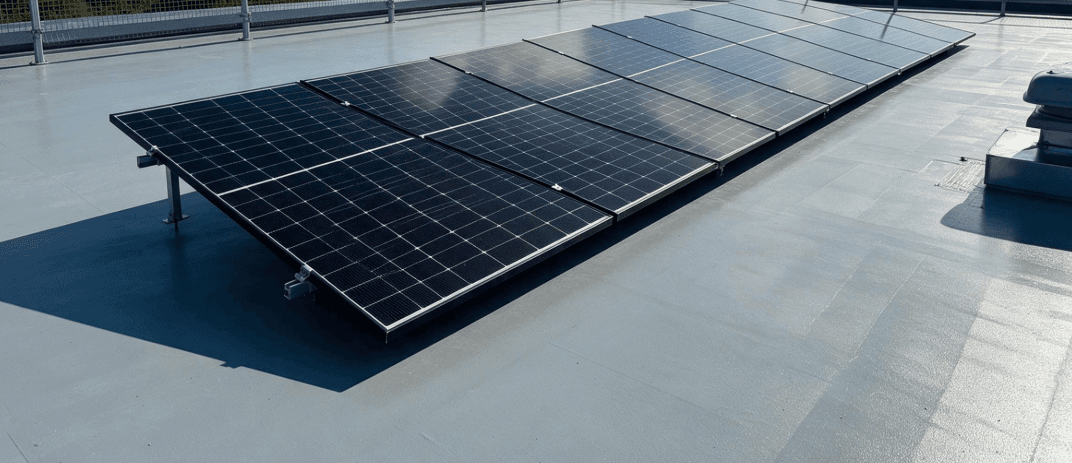
The system comprises ~19–20 solar panels arranged in two rooftop rows (~11–12 and ~8 panels), which at modern 450–550 W panel ratings gives an estimated capacity of ~9–11 kW, most likely 10 kW. Power conversion and storage are handled by a wall-mounted Hinen hybrid inverter and four Hinen stackable LiFePO₄ battery modules (~5.12 kWh each, ≈20 kWh total), with a CT/energy meter mounted beside the inverter for export monitoring. The panel brand could not be identified from the photos and is likely a CEC-approved third-party manufacturer such as Longi, Jinko, JA Solar, Trina, Canadian Solar, REC, or Qcells. In Australia, output varies by location — approximately 40–43 kWh/day in Sydney, 45–48 kWh/day in Brisbane, and 50–54 kWh/day in Perth, equating to roughly 13,500–19,500 kWh per year for a 10 kW system. The ~20 kWh battery is an excellent match for a 10 kW array: it captures midday surplus that would otherwise be exported at low feed-in tariffs under 5 kW single-phase export limits, lifting household self-consumption from ~30–40% to 70–90%. Beyond bill savings, the battery provides blackout backup and can earn revenue through Virtual Power Plant (VPP) programs, while all components should remain CEC-approved to qualify for STC rebates.